How to Choose a Book for Your Level
A practical guide to choosing an English book from A1 to C2, noticing when a text is too easy or too hard, and raising your reading level step by step.
English With Stories
10 min read
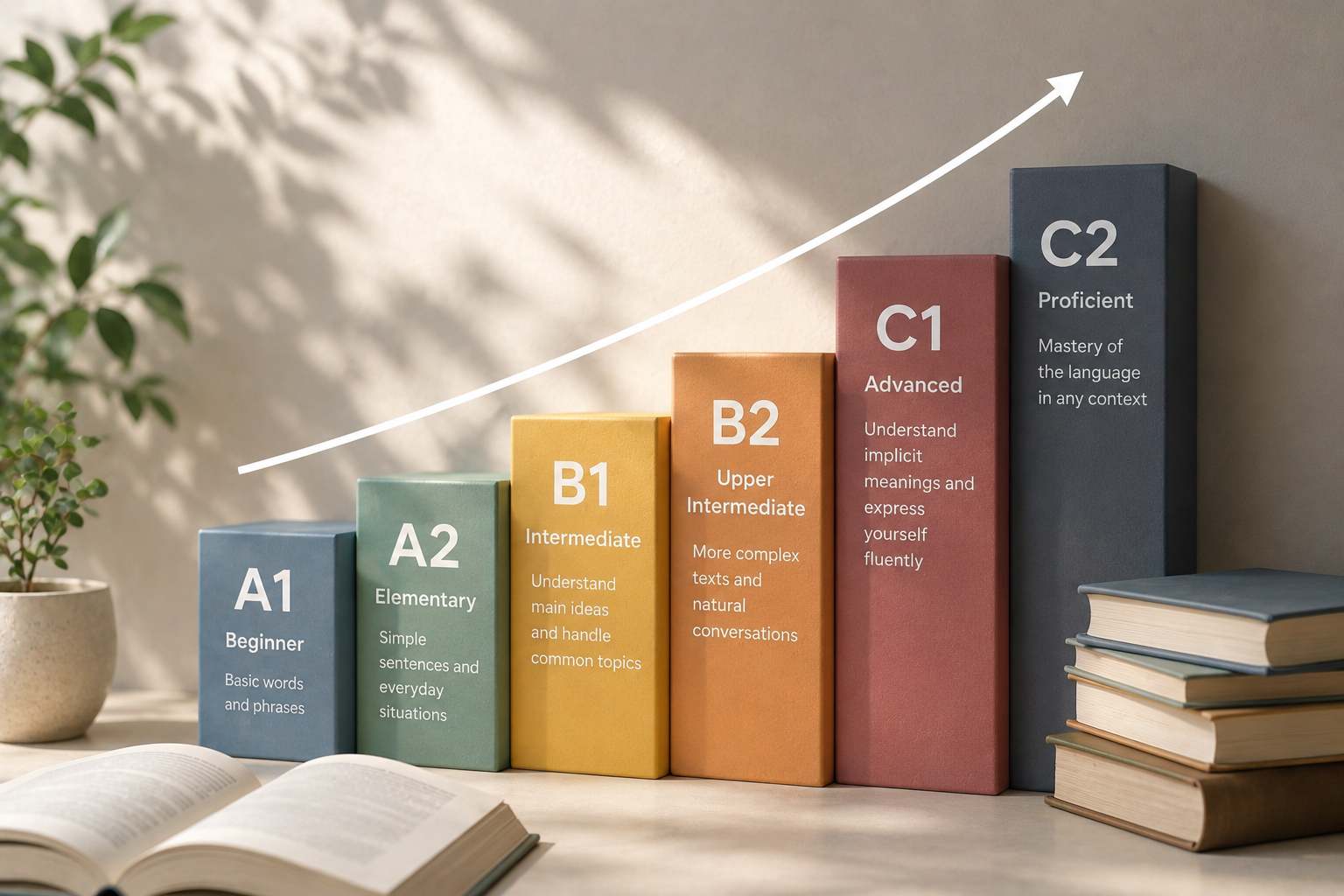
If you keep looking up words, reread the same paragraph, or put the book down after a few pages, the problem may not be motivation. The book is probably not a good match for your current level. On the other side, a book you understand with no effort may not give you enough new language. The right book is one you can follow, enjoy, and still meet new words and structures in. This guide turns the A1–C2 label into a real reading experience, so you can make a better choice.
Why the right book level matters
While you read, your mind follows the characters, events, words, and sentence structures at the same time. If the text is too hard, all your attention goes to unknown words and the meaning of the story is lost. Reading then stops being a natural language experience and becomes a long translation task.
In a book at your level, you can keep the context. You guess an unknown word from the sentences around it, see structures you already know again, and connect new phrases to a meaningful event. That balance supports both learning and a regular reading habit.
The best book is not the one that never challenges you. It is the one where you meet small, manageable difficulties without losing the story.
What do A1, A2, B1, B2, C1, and C2 mean?
These letters and numbers show general language levels in the Common European Framework of Reference. A level label is not only about word count. Sentence length, style, the complexity of events, and implied meaning also change as the level rises.
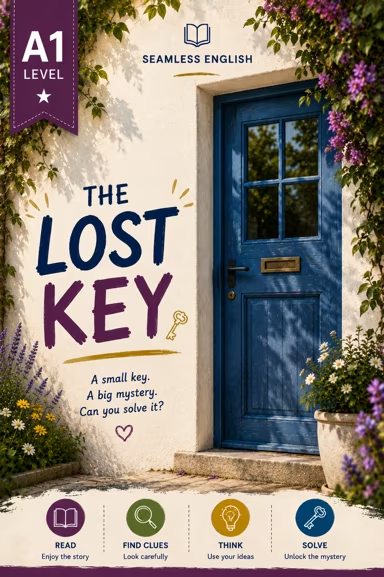
- A1: Short sentences, basic everyday words, and events that move in a straight line.
- A2: Wider description of familiar topics such as daily life, shopping, travel, and work.
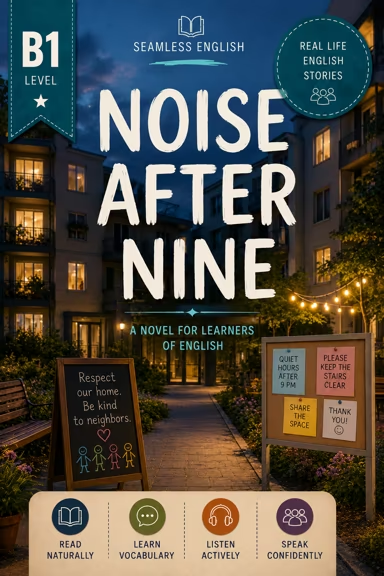
- B1: Longer sections, cause and effect, and the feelings and decisions of characters.
- B2: More natural language, a more detailed plot, and different points of view.
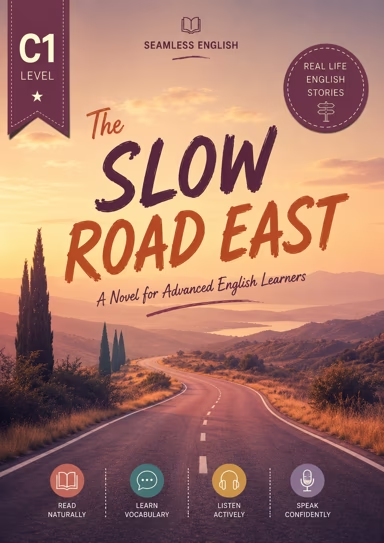
- C1: Advanced vocabulary, long sentences, tone, hints, and cultural detail.
- C2: Literary style, layered meaning, and texts that need close interpretation.
Do a one-page level check
Before you choose a book, open a random page from the middle and read it without a dictionary. The first chapter can look easier because it introduces the characters. The last chapter can look harder because you do not have the context. A page from the middle gives a more realistic result.
When you finish the page, do not only count unknown words. Look at how much you understood. If you can say who the character is, where they are, what they are doing, and why the paragraph matters, you are keeping the main flow of the text.
- Could you read the page without stopping all the time?
- Can you tell the main event in one or two sentences?
- Does the meaning stay clear if you skip most unknown words?
- Do the sentence structures feel familiar?
- Do you want to know what happens on the next page?
If you can say yes to at least four of these five questions, the book is probably right for independent reading.
Signs that the book is too hard
Seeing many unknown words on every page is not enough on its own. Some words only describe the setting or a small detail, and you can follow the story without them. The real measure is whether unknown language keeps cutting the meaning.
If most of the situations below continue for several sections, moving to an easier book is useful. This is not a step back. It is a clear choice that strengthens fluent reading.
- You need a dictionary every two or three sentences.
- You mix up the characters and the order of events.
- You cannot understand a paragraph without translating it.
- Even a short reading session feels mentally heavy.
- You follow single sentences, not the story.
How do you know the book is too easy?
Easy books are not a waste of time. Books a little below your level are especially useful for speed, automatic word recognition, and reading confidence. You can also use them for listening and reading aloud.
But if your aim is to learn new words and structures, meeting no new language across several books can be a sign it is time to move up. If you finish stories very fast, answer every question without thinking, and the text always feels predictable, you can try a short book from the next level.
Your reading plan can include two kinds of books: comfortable books for fluency, and slightly harder books for growth.
Your exam level and your reading level may not be the same
A B1 result on a placement test does not mean you will read every B1 book with the same ease. Tests can measure grammar, vocabulary, listening, and reading together. If you have not been reading books regularly, starting with A2 stories can still be the right move even if your overall level is B1.
The opposite is also possible. Someone who reads a lot about one topic may understand advanced texts on that topic, even if they struggle when they speak. So when you choose a book, trust the experience of a real page, not only a test result.
If you want to measure reading comprehension only, our free reading level test shows your estimated reading level from A1 to C2. The result is not an official certificate. It helps you see which stories to start with.
Topic knowledge and interest change the difficulty
A familiar topic feels easier than another text at the same level. Someone who works in an office may read a story with meeting, deadline, and project more easily, and then struggle with a historical or scientific text. That is not a sudden drop in language level. It is a change in topic knowledge.
Interest matters as much as level. In a story you care about, you are more willing to get through a few hard paragraphs. Instead of choosing a book only because it matches your level, look at both the language level and the theme you want to read.
- You can start with familiar themes such as daily life and family.
- If your goal is travel or work English, give related stories priority.
- You can compare short samples from different themes at the same level.
When should you move up a level?
You do not have to jump as soon as one book feels easy. Finishing two or three books comfortably at the same level is a more reliable sign. If your reading speed is rising, you use the dictionary less, and you can write section summaries easily, you are ready to try the next level.
Instead of moving all at once, you can alternate a long book at your current level with a short book at the next level. If the higher-level book is harder than you expected, do not hesitate to go back. Language growth is not a straight staircase. You move forward and back across different texts.
A practical rule: if you have finished three books at the same level without losing the flow, try a short story from the next level.
Try the book for seven days before you decide
The excitement or difficulty of the first page can mislead you. Giving the book a week of short sessions helps you make a healthier decision. Read for 15 minutes each day, and briefly note how often you use a dictionary, how much you understand, and how much you want to keep reading.
- Days 1–2: Follow only the flow of events.
- Days 3–4: Notice repeating words and phrases.
- Days 5–6: Summarise the section in your own sentences.
- Day 7: Review your reading speed, dictionary use, and motivation.
If you can tell the story after one week and you want to continue, you have chosen the right book.
In short: trust the reading experience, not only the label
A level label is a good starting point for finding the right book. Your real reading experience should make the final decision. If you can follow the main idea without a dictionary, guess most unknown words from context, and want to keep reading, the book is right for you.
First choose a story you can finish comfortably, build a regular reading habit, and raise the difficulty in small steps. The aim is not to read the hardest book possible. It is to stay with English in a way you can keep.