How Stories Improve Your English
Learn how to use stories at your level to build vocabulary, reading, listening, and speaking together — with a method you can keep.
English With Stories
8 min read

When you learn English, working only with grammar rules or word lists can get tiring. Stories let you see the language in a real situation. As you follow the characters, events, and feelings, you notice how words are used in a natural way. With the right level and the right method, one story can become practice for reading, vocabulary, listening, speaking, and writing.
1. Start with a story at your level
If a text has several unknown words in every sentence, it is hard to follow the story. If a text is too easy, it does not teach you much. The most useful story is one where you understand the flow, but you still meet new words and phrases from time to time.
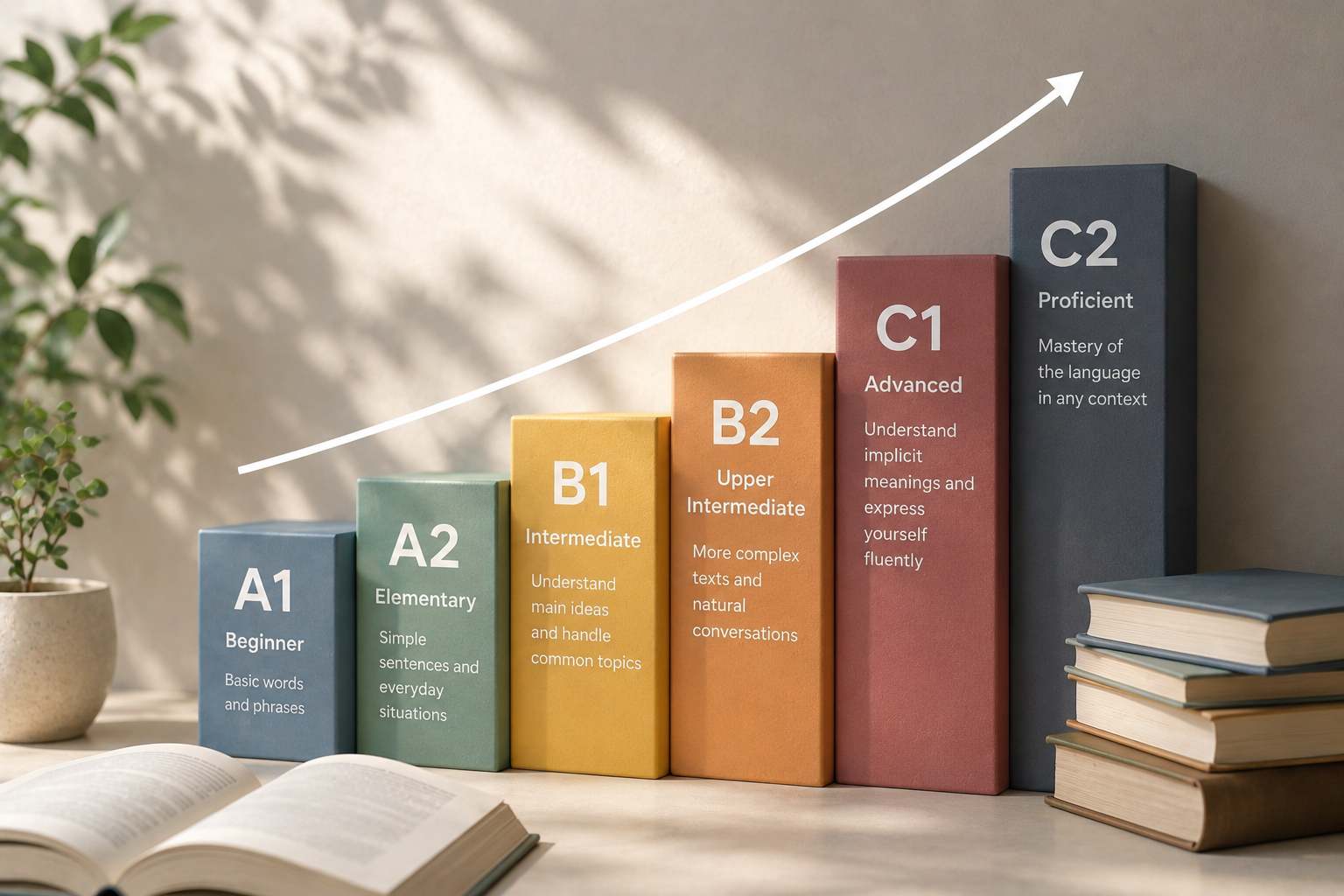
If you are a beginner, choose A1 or A2 stories. If you are intermediate, choose B1 or B2. C1 and C2 texts have longer sentences, hints, tone, and cultural detail.
A practical check: if you can understand about 90% of a page without a dictionary, the level is probably right for you.
2. Do not translate every word on the first read
On the first read, your aim is to understand the main idea and the flow of events. Stopping at every unknown word slows you down and takes the pleasure out of reading. First, try to guess from context. Check the word only if it really stops you from understanding the story.
If you can follow where a character is, what they want, and what problem they face, keep reading. You can look at the details on a second pass.
- Answer who, where, and what is happening.
- Guess whether an unknown word is positive or negative.
- Mark words and phrases that repeat.
3. Learn words in sentences, not on their own
Knowing one meaning of a word does not mean you can use it. You also need to see which verbs, prepositions, and adjectives go with it. Stories show these relationships in a ready-made context.
For example, instead of only learning the word deadline, note phrases such as meet a deadline, miss a deadline, and a tight deadline. Then the new word is easier to remember when you speak and write.
4. Listen to the same section again
After you read the text, listening to the audio helps you hear how words you already know on the page actually sound. On the first listen, you can follow the text. On the second listen, try to understand without looking at the screen.
Pause a short sentence and say it out loud. This is useful for rhythm, stress, and fluency. Do not aim for a perfect accent. Aim to copy the natural flow of the sentence.
- First, listen while you follow the text.
- Then listen to the same part without the text.
- Repeat two or three sentences out loud.
5. Give short answers about the story
Comprehension questions are not only for finding the right answer. Writing the answer in your own sentence turns passive knowledge into active use. At the start, one or two short sentences are enough.
At higher levels, you can comment on a character's decisions, write a different ending, or tell the events from another character's point of view.
6. Review with space between sessions
It is normal to remember a lot on the day you finish a story. Real learning happens when you come back a few days later. Return to the words you noted, the important sentences, and the answers you wrote.
You do not have to reread the whole story. It is enough to reread one page, review your word cards, or summarise the story in one minute.
A simple review plan: a short look on the same day, a summary three days later, and a word and sentence review one week later.
7. Make a regular, realistic plan
A few sustainable reading sessions each week work better than long study every day. A 15- or 20-minute session can be one section of reading, a look at the words, and answers to two questions.
As your level rises, increase the length and difficulty of the stories. Measure progress not only by how many books you finish, but also by using the dictionary less, reading faster, and building sentences more easily.
Why learning English through stories works
A story presents language as a meaningful whole, not as separate facts. You see what a word means, when it is said, and how the speaker feels — at the same time. That context helps you remember what you learn for longer.
For the best result, do not only read. Listen to the text, save useful phrases, answer questions, and connect the language to your own life. Then a story is no longer just something you consume. It becomes a regular English study system.